
An app can look polished and work smoothly yet still miss its mark if research, design, engineering, and launch pull in different directions. The right mobile app development agency does more than deliver code. It connects your product goals to the decisions that shape a useful, launch-ready experience.
End-to-end development can span early research and UX decisions through iOS and Android development, app store deployment, and learning from real-world use. Clear milestones help connect these stages and show what the team is working toward at each point.
In this guide, you’ll learn what to expect from an agency partnership, how to compare approaches, and how to judge whether a proposed scope serves your product’s needs. You’ll also see how Brilliamp brings research-driven design, engineering, and launch support together to turn product goals into a practical proposal.
Key Takeaways
- A mobile app development agency should connect product goals with thoughtful design and practical engineering, not treat the app as code alone.
- Map discovery, user flows, platform choices, deployment, and post-release learning to understand what an end-to-end project can involve.
- Compare native and cross-platform approaches against your users’ needs, experience expectations, and future maintenance.
- Shape a focused first release by defining your users, core need, essential features, and what can wait.
- Brilliamp turns product goals into a scoped proposal, with milestone-based work that can carry an app from concept through launch and growth.
When a Mobile App Development Agency Is the Right Product Partner
A promising app idea needs more than a working build. The user experience, technical choices, and business goal have to line up. A mobile app development agency brings these disciplines together to turn a business need into an app people can use.
What does a mobile app development agency do?
A mobile app development agency connects product planning, user experience design, and app engineering to shape and deliver a mobile product. Depending on the agreed scope, its work can link discovery and feature planning with UI/UX design, iOS and Android development, testing, and deployment. Mobile app development covers the process of creating software for mobile devices and the platforms it runs on.
The scope matters. One engagement might focus on engineering a defined set of screens and features. Another might begin by clarifying the user problem, mapping key flows, and deciding what belongs in the first release. Neither model is automatically better. The right fit depends on how clear the product direction is and which skills your team already has.
When does an agency partnership make sense?
An external product team can help when a founder has a promising direction but needs to work out how it should function in practice. It can also support an established business improving a digital service, such as replacing a clumsy booking journey with a clearer mobile experience. In either case, start by connecting user needs to product decisions, rather than adding features for their own sake.
A coordinated team can keep design and engineering in close conversation. For example, designers can shape a checkout flow alongside developers who understand the integrations and performance requirements behind it. This feedback loop can reduce avoidable handoffs and help the finished experience work as well as it looks.
An agency can also complement an existing product or engineering team. Your in-house team might own product strategy and customer relationships, while an external partner adds design or development capacity for a defined phase. Or an agency can help establish the product foundations before internal teams take on more of the work. Clear responsibilities and deliverables make either arrangement easier to manage.
Before choosing a partnership model, consider four practical questions:
- What user or business need should the app address?
- Which decisions are still uncertain, such as core features or user flows?
- What product, design, and engineering capacity can your team contribute?
- Do you need a focused build, or support connecting planning through launch?
Your answers help define a scope that fits the product instead of forcing it into a preset package. Brilliamp shapes work around your goals, users, and team capacity, then connects refined design with functional engineering.
What End-to-End Mobile App Development Should Include
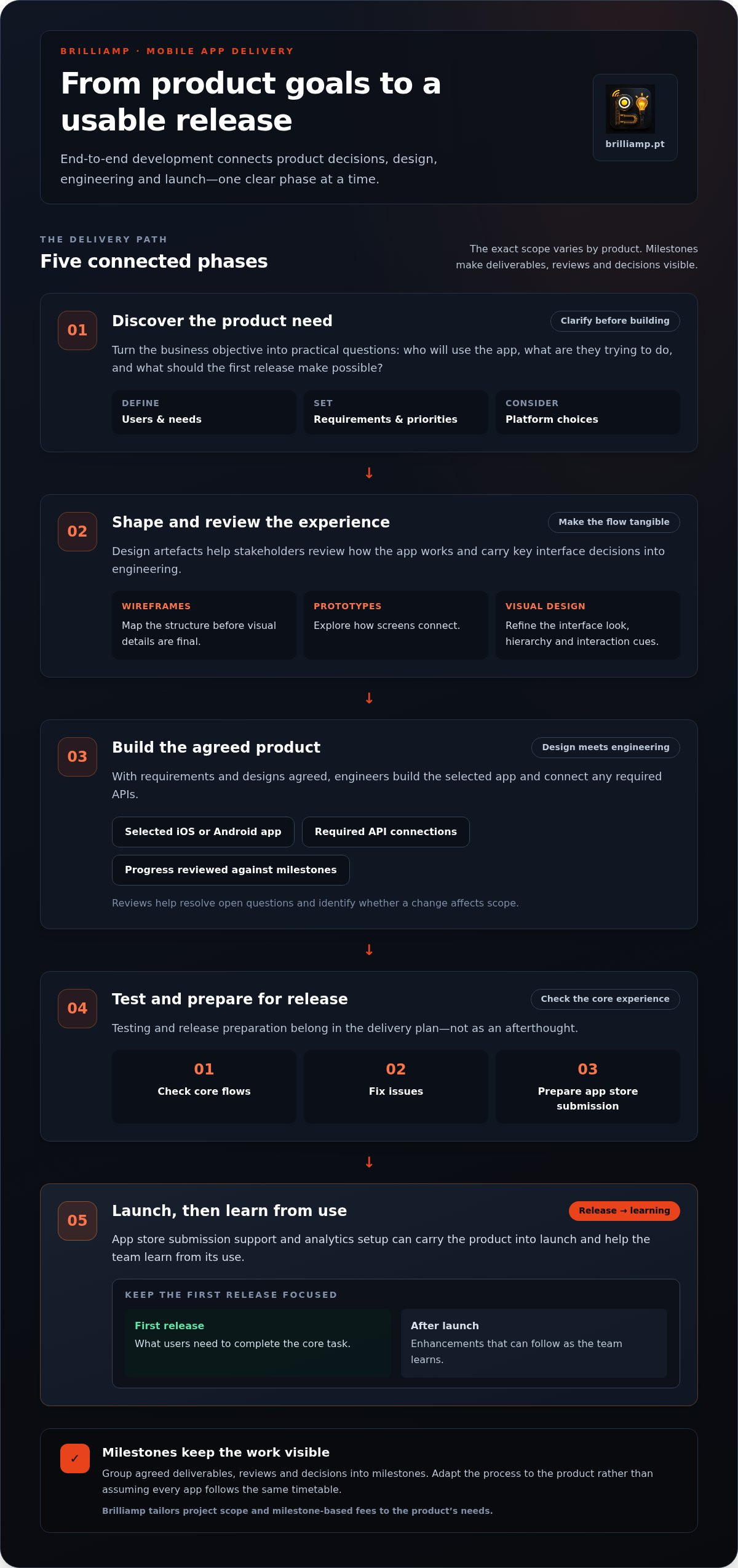
End-to-end work connects product decisions to a usable release instead of treating design, engineering, and launch as separate tasks. A mobile app development agency should shape the work around your goals and make clear what each phase will produce. The exact scope varies by product, but the stages below offer a useful way to assess a proposal.
From product goals to an app design
Discovery turns a business objective into practical questions: who will use the app, what are they trying to do, and what should the first release make possible? The answers inform requirements, feature priorities, user flows, and platform choices. A service designed for quick repeat transactions, for example, may need a different flow from one that helps users complete a detailed application.
Wireframes map the structure before visual details are final. Interactive prototypes let teams explore how screens connect, while visual design refines the interface’s look, hierarchy, and interaction cues. These artefacts give stakeholders something concrete to review. A considered design handoff carries key interface decisions into engineering, helping the built app reflect the intended experience. IBM’s overview of mobile application development also describes how app creation combines software, platforms, and development choices.
From engineering to app store deployment
With requirements and designs agreed, engineers build the selected iOS or Android app and connect any required APIs. The team can review progress against milestones, resolve open questions, and identify whether a change affects scope. Regular reviews tie feedback to working product decisions, not just abstract plans.
Testing and release preparation belong in the delivery plan. Teams can check core flows, fix issues, and prepare the app for submission to the relevant app store. App store submission support and analytics setup can carry the product into launch and help the team learn from its use.
Not every future idea needs to be in the first release. Separate what users need to complete the core task from enhancements that can follow after launch. This keeps the initial scope focused while leaving room to refine the product as the team learns.
Milestones make the path visible by grouping agreed deliverables, reviews, and decisions. They also let the team adapt the process to the product rather than assume every app follows the same timetable. Brilliamp tailors project scope and milestone-based fees to the product’s needs, connecting design, engineering, and launch. If you’re shaping an app brief, explore Brilliamp’s app development approach as a starting point.
How to Compare Mobile App Agency Approaches Without Guesswork
The right approach depends on what your product needs to do, who will use it, and what your team can maintain. A mobile app development agency should explain the trade-offs and define milestones, decisions, and deliverables so the project stays grounded in an agreed scope. There’s no universal winner between platforms or partnership models.
Native or cross-platform app development?
Native development builds specifically for iOS or Android. It may suit products with platform-specific requirements or experience expectations. Cross-platform development can support releases across both platforms using a shared codebase. Flutter is one cross-platform option, not a default answer. The best fit depends on required features, interface needs, integrations, and how the product will be maintained.
Compare the approaches against your actual requirements rather than assumed speed or savings. Adobe describes app development as a strategic imperative for enterprises, reflecting how platform choices should serve wider product and business goals.
| Approach | Useful context | Trade-offs to consider |
|---|---|---|
| Native | Platform-specific capabilities or carefully tailored experiences matter. | Separate platform work may affect how features and maintenance are planned. |
| Cross-platform | You want to serve iOS and Android through a shared development approach. | Check that required interactions, integrations, and performance expectations fit the chosen framework. |
Build-only delivery or a product partnership?
A build-only engagement can fit when requirements, designs, and technical decisions are already settled in-house. The team focuses on implementing the defined work. A broader product partnership can add research, UI/UX design, and launch planning when direction or user flows still need shaping. Brilliamp connects design, mobile engineering, and launch support around agreed product goals.
Use this comparison to clarify what you need, not to assume one model is best:
- Defined scope: Are features and designs ready for engineering, or do they need discovery and refinement?
- Team capacity: Which product, design, and engineering decisions can your internal team own?
- Release needs: Does the work end with a build, or should it also cover deployment and launch preparation?
- Project control: Are deliverables, review points, decision owners, and change approvals clear?
These checkpoints help prevent scope from drifting while leaving room to adapt thoughtfully. If you’re weighing the right model for your app, discuss your product goals with Brilliamp and shape a scope around what the product needs.
How to Shape a Mobile App Agency Project Around Your Goals
A clear brief doesn’t need polished screens or technical jargon. It needs to explain the problem your app should solve and the choices that will shape the first release. That gives a mobile app development agency a practical starting point for turning your goals into a project scope you can review.
Prepare a focused app brief
Write down who the app is for, what those users need to do, and what outcome would make the product useful to them and your business. Keep the description plain. For example, “help customers book and manage appointments” gives a team more direction than “build a modern app.”
Next, separate essential actions from optional ideas. Focus on the smallest complete experience that addresses the user need, rather than trying to include every feature that might be useful one day. Note relevant context without prescribing the solution:
- Users and need: Who will use the app, and what are they trying to accomplish?
- Core actions: What must users be able to do in the first release?
- Known dependencies: Are there existing systems or integrations the app may need to connect with?
- Platform and constraints: Which devices or platforms matter, and what business requirements could affect delivery?
- Launch assumptions: What needs to be ready for release, and what can be learned or added later?
It’s fine to mark unknowns as questions. A useful brief shows what you know, what you’re assuming, and what needs investigation. That distinction keeps early decisions flexible without leaving the project direction vague.
Turn the brief into scope and milestones
Discovery can test the brief’s assumptions, clarify user priorities, and surface technical requirements such as integrations or platform needs. The result is a sharper definition of what belongs in the initial scope and what can wait. An agency can translate business goals into deliverables rather than estimate a feature list before the problem is clear.
Milestones give the project visible checkpoints. Each can identify the work to review, decisions needed from your team, and deliverables expected before moving forward. For instance, a design review can settle a key user flow before engineering builds around it. Clear checkpoints make it easier to discuss changes and understand how they affect the agreed scope.
Fees depend on the agreed scope, including the features, integrations, and project needs involved. Brilliamp tailors project fees to the work, using milestone-based planning to connect priorities to delivery. Shape your app project proposal with Brilliamp around the users, goals, and first-release essentials that matter most.
Work With Brilliamp From App Concept to Launch
A strong app starts with a clear product need, then moves through deliberate decisions: define who the product serves, agree what belongs in scope, design the experience, build it, and prepare for launch. Brilliamp brings these steps together as a product partner, connecting the original idea to a refined, functional app.
What Brilliamp can bring to your product
Brilliamp is a startup studio creating mobile and web applications for startups and businesses. Research-driven UI/UX design helps shape the product around user needs, while iOS and Android engineering turns those decisions into working experiences. Keeping design and development connected helps teams make informed choices as the product takes shape.
The right engagement depends on your goals. A project can focus on a mobile app, connect mobile and web experiences, or include launch and post-release learning. App store deployment, analytics, SEO, and growth support can help the product reach its launch goals and inform what comes next. These services are considered in relation to the product’s needs and agreed scope.
As a mobile app development agency, Brilliamp makes the project path clearer through an agreed scope and milestone-based work. Each milestone gives the team a point to review progress, discuss decisions, and keep delivery connected to the product goal. Fees are tailored to the project scope, so the proposal reflects the work involved rather than a one-size-fits-all package.
Take the next step with a clear project brief
You don’t need a finished specification to begin. Share the product goal, who you want to reach, and the essential actions the first release should support. Include any known platform needs, integrations, or launch plans. Open questions are useful context because they help frame the project conversation.
Brilliamp offers a free consultation, followed by a project proposal within 24 hours. The proposal gives you a practical view of potential scope and milestones, so you can consider the next steps with greater clarity.
Bring the idea, the user need, and what you know so far. Talk through your app idea with Brilliamp and start shaping a product journey from concept to launch.
Shape Your App’s Next Step
The right mobile app development agency connects product goals with thoughtful design, engineering, and launch planning. The best approach depends on your users, platform needs, and internal capacity, while a focused first release keeps the scope centred on what matters most.
Clear priorities make for a more useful project conversation. Define the problem your app should solve, who it serves, and the essential actions it needs to support. From there, milestones and agreed deliverables create a practical path from concept to launch.
Brilliamp offers a free consultation for prospective projects, followed by a project proposal within 24 hours. Project fees are milestone-based and tailored to the agreed scope, giving you a clearer view of the work ahead.
Ready to shape your idea into a product plan? Talk through your app idea with Brilliamp. Start with a simple conversation about your product goal.
Frequently Asked Questions
How do I choose a mobile app development agency?
Choose an agency approach that fits your product goals, user needs, and internal capacity. Look for a clear explanation of how design and engineering connect, what deliverables are included, and how milestones support reviews and decisions. Brilliamp shapes proposals around each project’s scope, so you can assess the planned work against your priorities. A free consultation can help you outline the product need and discuss a practical next step.
How much does it cost to hire a mobile app development agency?
The cost depends on the agreed project scope, including features, platforms, design needs, integrations, and launch requirements. A focused build with defined designs involves different work from a project that also needs research, UX/UI design, and deployment. Brilliamp tailors project fees to the scope and uses milestone-based fees to structure delivery. A project proposal clarifies the planned work before development begins.
How long does it take an agency to develop a mobile app?
There’s no single timeline for every app. The schedule depends on how clearly requirements are defined, the number and complexity of features, platform decisions, integrations, reviews, and release preparation. Discovery and design may shape the plan before engineering starts. Ask for milestones that show the work and decisions ahead, then use reviews to keep the agreed scope clear. A realistic schedule should reflect the product, not a generic estimate.
Should I build a native app or use cross-platform development?
Choose based on your product’s platform requirements, user experience expectations, and maintenance plans. Native development targets a specific platform, while cross-platform approaches can support iOS and Android from a shared development approach. Flutter is one cross-platform option, but it isn’t automatically right for every product. Compare the required features, integrations, interface needs, and long-term plans before settling on an approach.
Can a mobile app development agency help after launch?
Yes. Post-launch work can include deployment support, analytics setup, and growth activities as part of the project scope. Analytics can help a team understand how users interact with the app and identify opportunities to refine the experience. Brilliamp includes launch and post-release support in product development, connecting the initial release with ongoing learning and product improvements.
What should I prepare before speaking with an app development agency?
Prepare a short description of the user problem, intended audience, and outcome you want the app to support. List the essential actions users need in the first release, plus features that can wait. Include known platform needs, integrations, business constraints, and launch assumptions. You don’t need a finished technical specification. Brilliamp offers a free consultation and provides a project proposal within 24 hours to help clarify the potential scope.